Locomotion
A single policy, trained from scratch, takes ANYmal C and D across every terrain, from stepping stones to floating islands.
Octi Zhang1,2*Mateo Guaman Castro1*Patrick Yin1*Ignacio Dagnino1Abhishek Gupta1Rosario Scalise1†Byron Boots1†
1University of Washington2NVIDIA*Equal contribution†Equal advising
CoRL 2026Paper ↗Code (coming soon)
All videos at 1×
UR5e, NutHardware
Highlights
All videos at 1×
UR5eHardware
UR5eSimulation
FrankaSimulation
ANYmal CSimulation
ANYmal DSimulation
Success-Guided Sampling (SGS) trains on the task configurations that are neither too easy nor too hard for the current policy. With it, reinforcement learning scales much more effectively, to over a million simulated robots at once, in legged locomotion and contact-rich manipulation.
A single policy, trained from scratch, takes ANYmal C and D across every terrain, from stepping stones to floating islands.
UR5e and Franka learn per-task contact-rich assembly from the NIST task board, with zero demonstrations and the same reward function across all tasks.
Trained only in simulation, the UR5e assembles parts on the real task board from RGB images, zero-shot.
SGS keeps improving as parallel environments grow to a million, where uniform sampling and other methods fall behind.
SGS is standard PPO with a small outer loop. It changes only which task configuration an environment resets to.
added changed
A task configuration is a triple (s0, g, e): the robot’s initial state s0, its goal g, and the environment e, such as the terrain type or the layout of the scene. SGS samples a large, fixed set of task configurations before training.
For assembly, the task configurations come in equal parts from three reset strategies.
Franka, nut on boltSimulation
The nut starts anywhere in the workspace, next to the gripper but not always in it, so the robot may have to fetch it first.
We follow one fixed task configuration of each UR5e task through the course of training. SGS gives it small weight while the policy never solves it, large weight when it’s getting better but not perfect, and small weight again once the policy has mastered it.
Iteration 2,8000 of 64 successes
| Iteration | Successes | 95% interval | SGS weight |
|---|---|---|---|
| 0 | 0 of 64 | 0%–6% | 0.14 |
| 1,000 | 0 of 64 | 0%–6% | 0.14 |
| 1,800 | 0 of 64 | 0%–6% | 0.14 |
| 2,800 | 0 of 64 | 0%–6% | 0.14 |
| 3,800 | 9 of 64 | 8%–25% | 0.83 |
| 4,000 | 27 of 64 | 31%–54% | 0.99 |
| 4,200 | 51 of 64 | 68%–88% | 0.90 |
| 4,400 | 52 of 64 | 70%–89% | 0.88 |
| 4,600 | 57 of 64 | 79%–95% | 0.79 |
| 5,400 | 59 of 64 | 83%–97% | 0.73 |
Results
UR5e
ManipulationHardware, Simulation
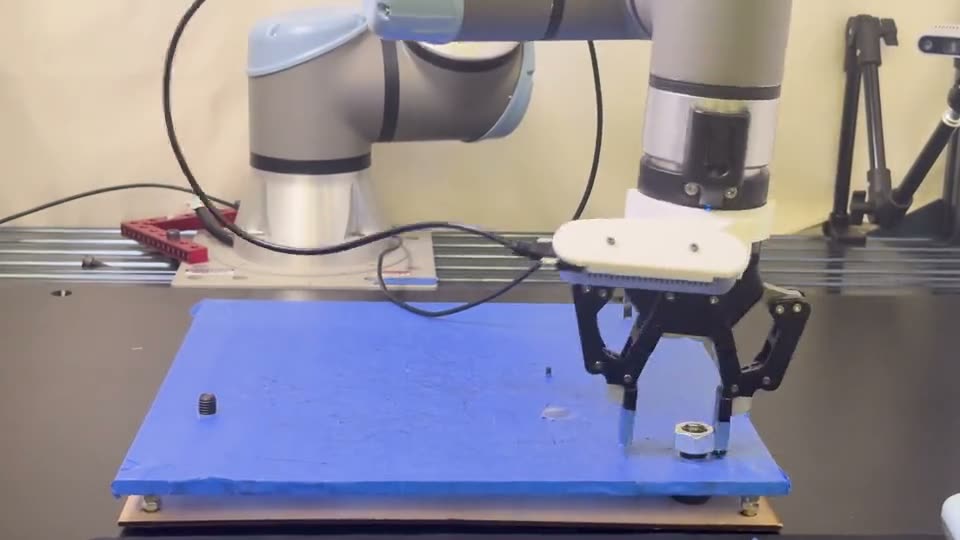 Nut
Nut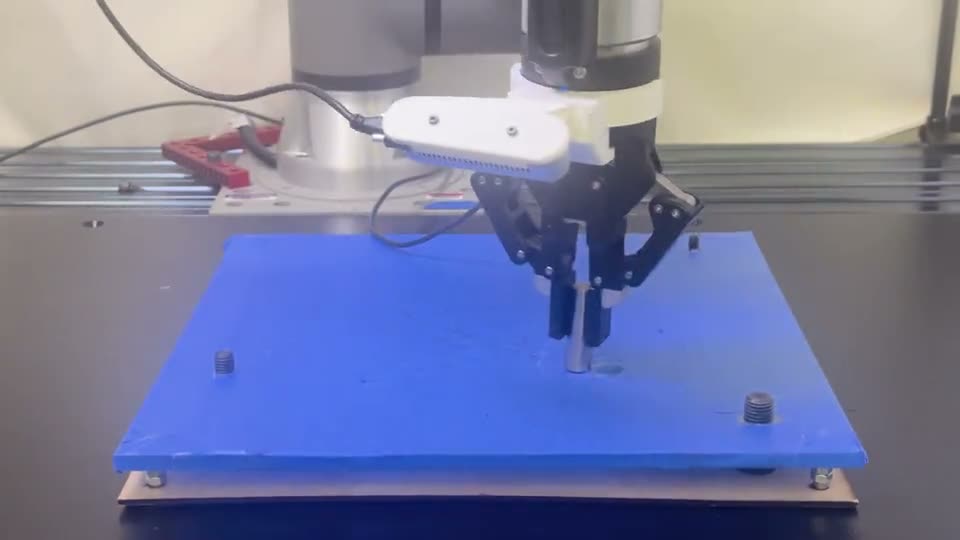 Rod
Rod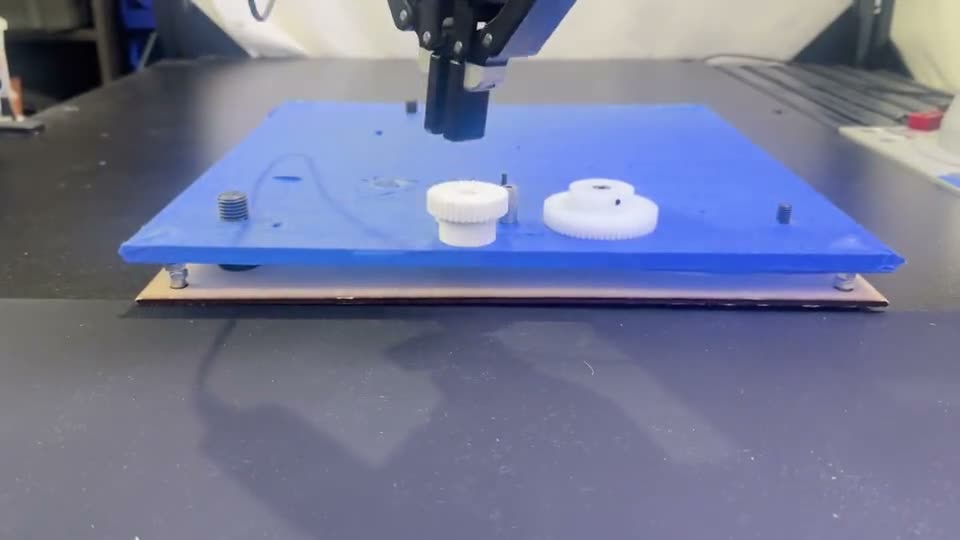 Gear mesh
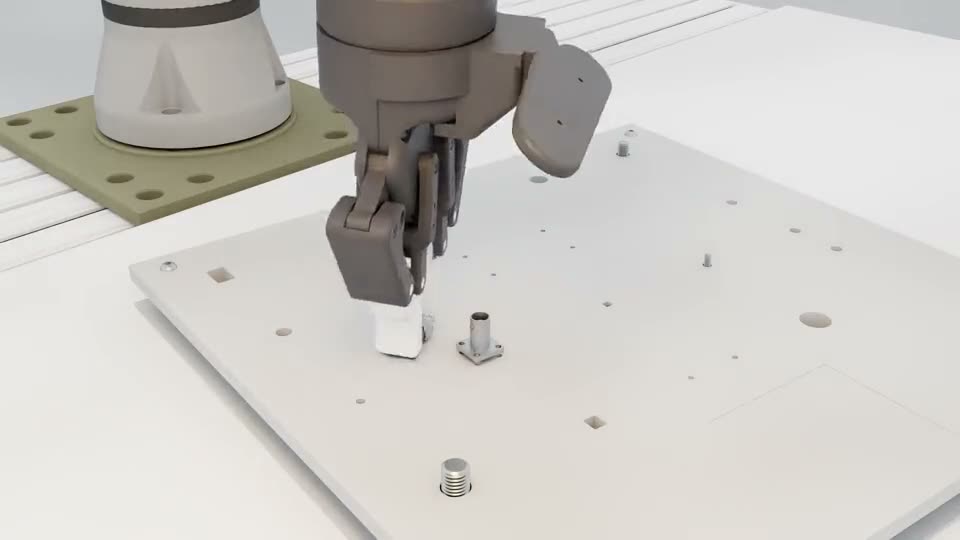 BNC connector
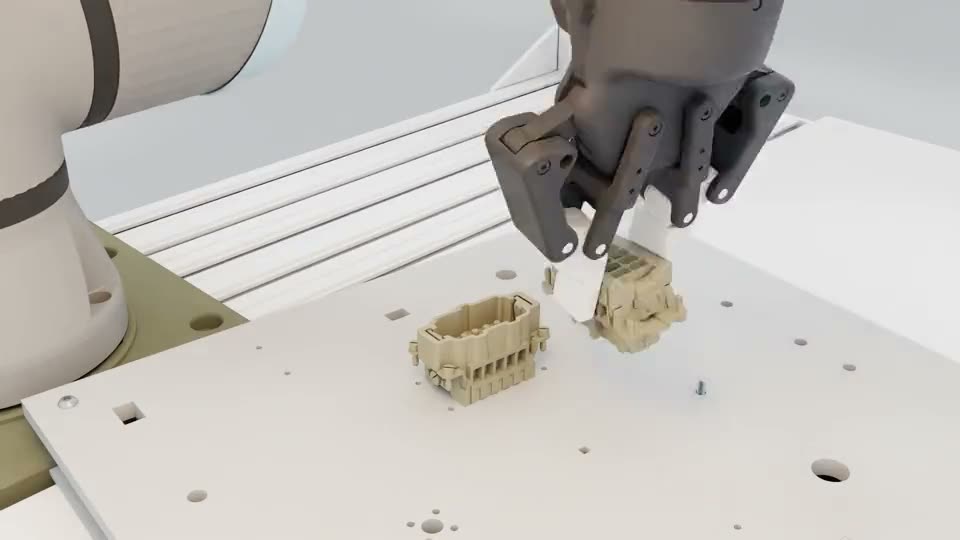 Waterproof connector
Franka
ManipulationSimulation
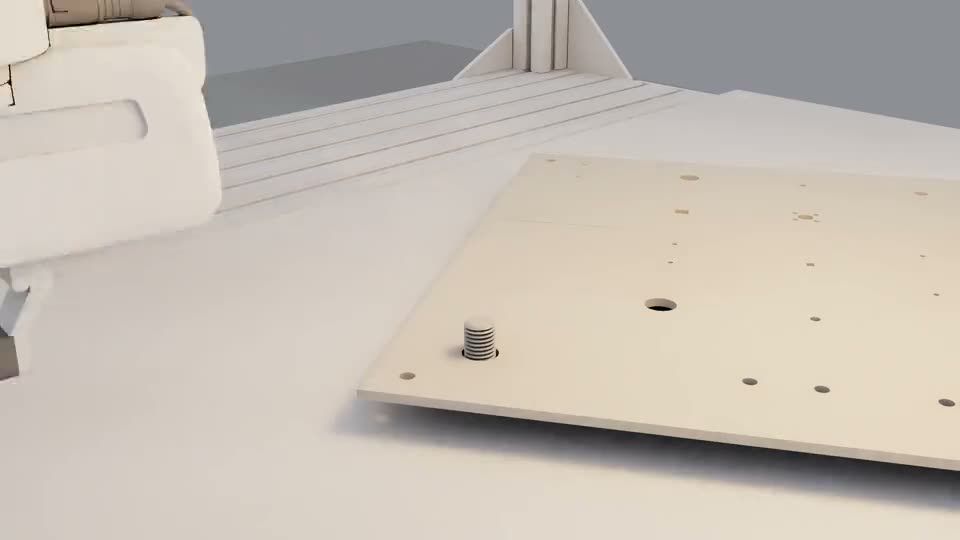 Nut
NutANYmal C
LocomotionSimulation
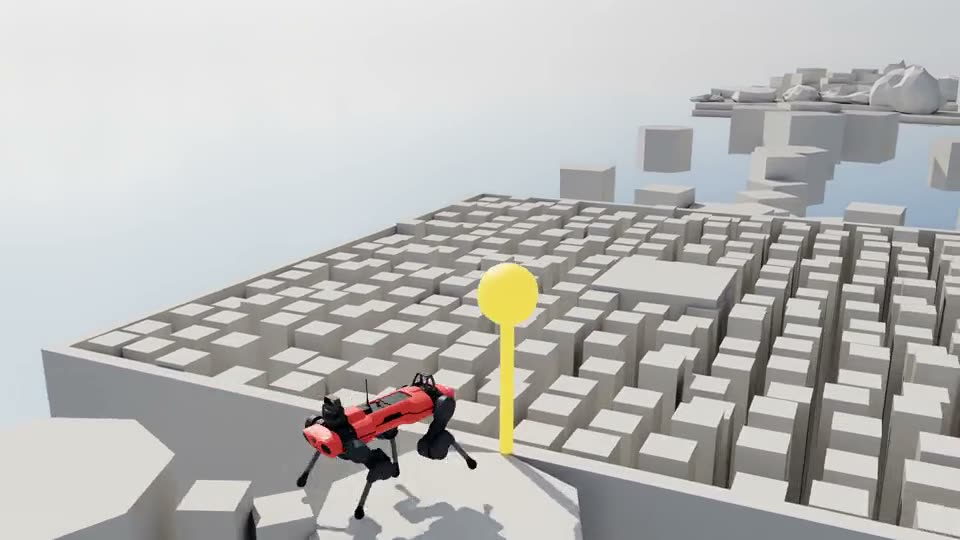 Across terrains
ANYmal D
LocomotionSimulation
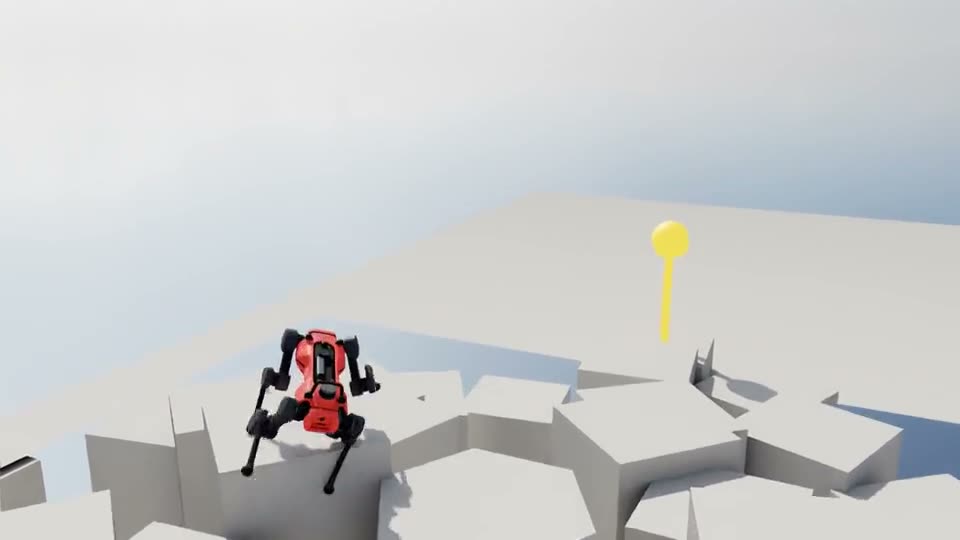 Climbing box
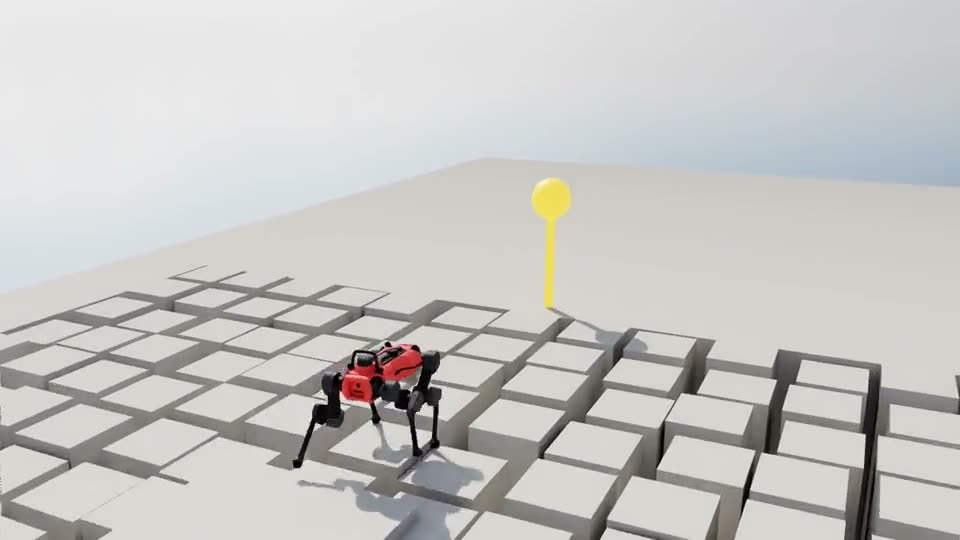 Stepping stones
With SGS, success keeps rising as the number of parallel environments grows to a million. The baselines stall or collapse.
SGSPLRUniformLinear curriculum
Success rate
| Method | 4K | 32K | 256K | 1M |
|---|---|---|---|---|
| SGS | 0.46 ± 0.02 | 0.49 ± 0.11 | 0.72 ± 0.05 | 0.73 ± 0.01 |
| PLR | 0.00 ± 0.00 | 0.13 ± 0.01 | 0.55 ± 0.14 | 0.54 ± 0.13 |
| Uniform | 0.00 ± 0.00 | 0.42 ± 0.04 | 0.00 ± 0.00 | 0.00 ± 0.00 |
| Linear | 0.00 ± 0.00 | 0.32 ± 0.03 | 0.00 ± 0.00 | 0.00 ± 0.00 |
Success rate
| Method | 4K | 32K | 256K | 1M |
|---|---|---|---|---|
| SGS | 0.00 ± 0.01 | 0.06 ± 0.01 | 0.10 ± 0.14 | 0.70 ± 0.19 |
| PLR | 0.00 ± 0.00 | 0.00 ± 0.00 | 0.02 ± 0.04 | 0.05 ± 0.11 |
| Uniform | 0.00 ± 0.00 | 0.00 ± 0.00 | 0.01 ± 0.04 | 0.06 ± 0.13 |
Trained only in simulation, the UR5e runs on the real task board from RGB images, zero-shot.
@inproceedings{zhang2026balanced,
  title     = {A Balanced Data Diet: Addressing the Exploration Bottleneck in Mega-Scale RL for Robot Control},
  author    = {Zhang, Octi and Guaman Castro, Mateo and Yin, Patrick and
               Dagnino, Ignacio and Gupta, Abhishek and Scalise, Rosario and
               Boots, Byron},
  booktitle = {Conference on Robot Learning (CoRL)},
  year      = {2026}
}If you want to adapt this website or use its videos, see the Terms of Use.